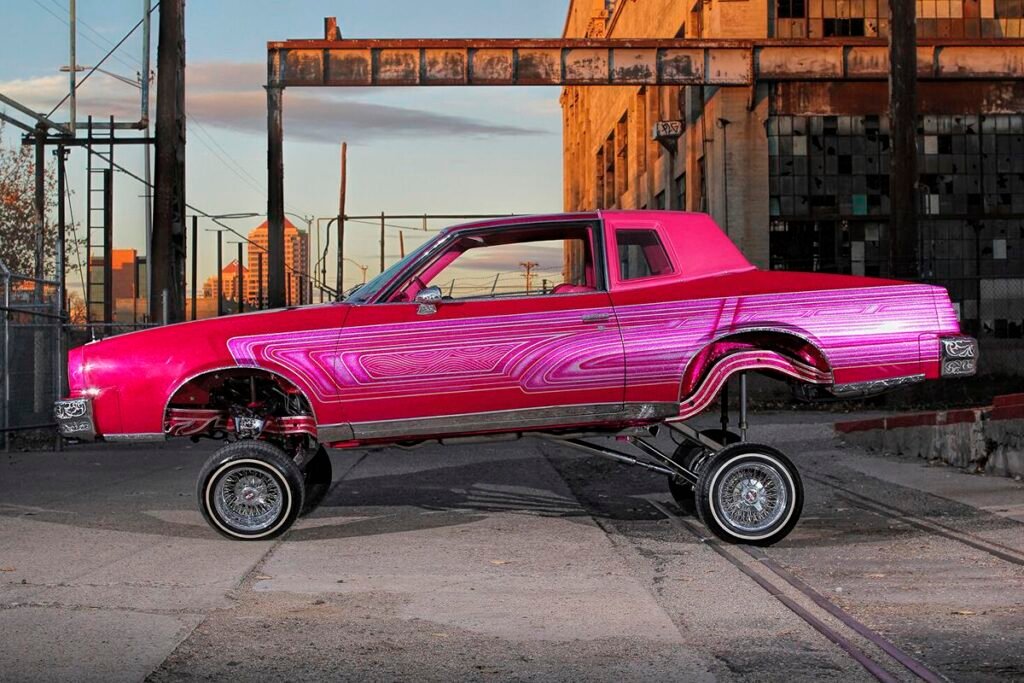
If you want to instantly change the entire attitude of a car—especially a classic G-Body, a Cadillac, or a traditional lowrider—you don’t need a crazy paint job. You just need a set of 100-spoke wire wheels.
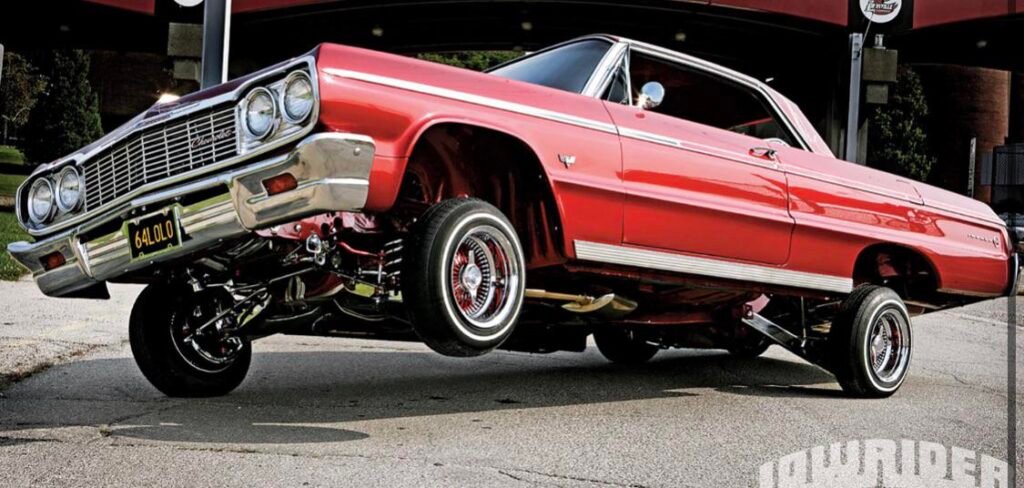
But if you’ve only ever dealt with standard 5-lug wheels, buying your first set of knock-offs can feel like dealing in black magic. There are no lug holes on the wheel itself. You have to beat them on with a hammer. And if you put them on the wrong side of the car, they will unscrew themselves and pass you on the highway.
Here is the Garage Talk breakdown of how knock-off wire wheels actually work, who makes them, and how to keep them on your car.
1. The Holy Trinity: Dayton, Zenith, and LA Wire
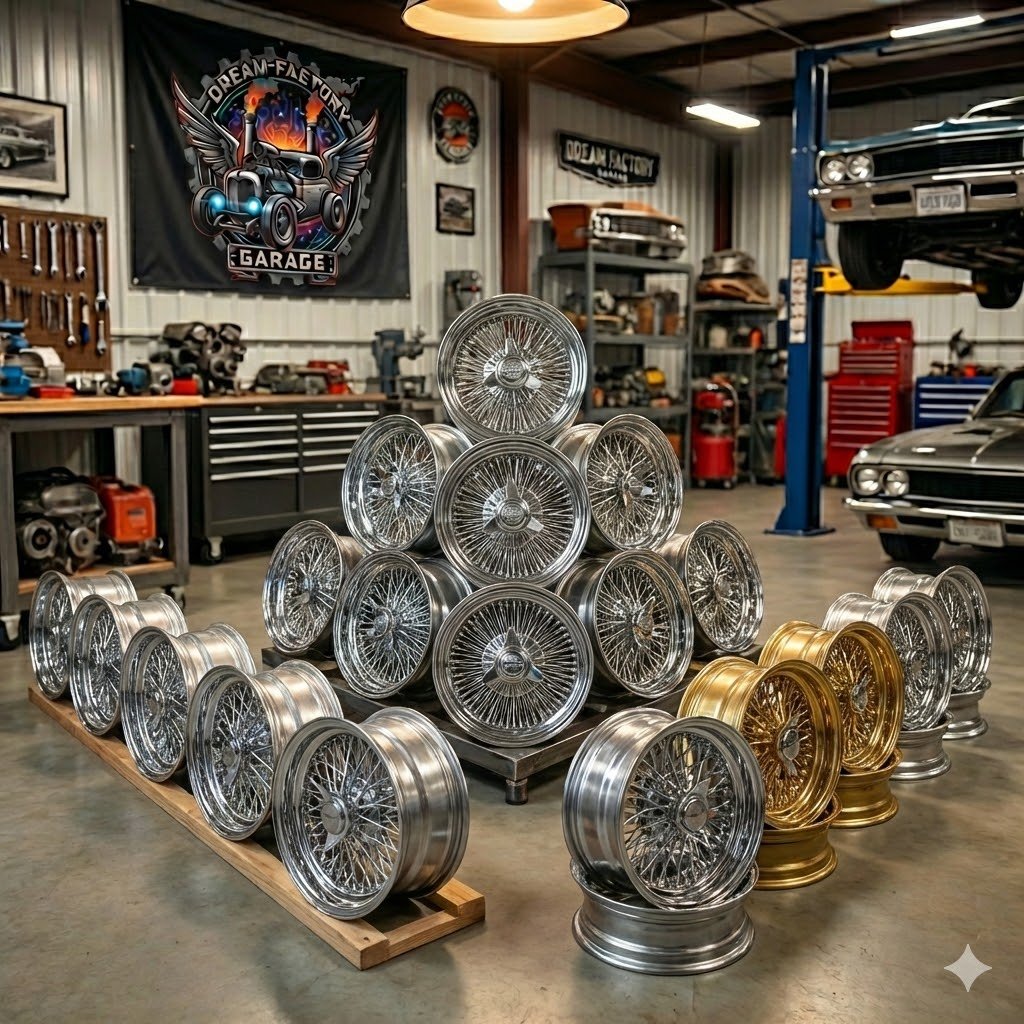
Not all wire wheels are created equal. If you are shopping for a set, you need to know the names that built the culture:
• Dayton Wire Wheels: The undisputed kings. “Daytons” are the Rolex of the wire wheel world. They are forged, hand-laced, and sealed so well you can run them tubeless. They are expensive, but they are the gold standard.
• Zenith: The pioneers. Zenith practically invented the modern lowrider wheel. They are legendary in the streets, known for their brilliant chrome and traditional cross-lace designs.
• LA Wire: A massive staple in custom car culture. They brought high-quality, 100-spoke designs to the masses. If you see a killer street cruiser laying frame, there is a good chance it’s rolling on LA Wires.
2. How Does a Knock-Off Actually Work?
Traditional wheels bolt directly to the car using lug nuts. Knock-offs use a three-piece system:
• The Adapter: This is a heavy steel hub with a splined (grooved) cylinder. You bolt this adapter to your car’s factory brake rotor using your standard lug nuts.
• The Wheel: The wire wheel has a matching grooved hole in the center. You slide the wheel directly over the splined adapter. The splines lock together so the wheel spins with the axle.
• The Knock-Off (The Spinner): This is the threaded metal cap (usually 2-ear, 3-ear, or bullet-shaped) that screws directly onto the adapter, pinning the wheel to the car.
3. Left Side vs. Right Side: The Deadly Mistake
This is the most important rule of wire wheels: The adapters are directional.
Because the forward motion of the car wants to naturally unscrew the spinner, the threads are reversed on the passenger side.
• Driver’s Side (Left): Standard right-hand threads (Righty-tighty, Lefty-loosey).
• Passenger’s Side (Right): Reverse threads (Lefty-tighty, Righty-loosey).
If you mix up the adapters and put the right-side adapter on the driver’s side, the forward motion of your car will slowly unscrew the knock-off while you drive. Eventually, the wheel will completely detach. Always check the stamps on the adapters before bolting them up!
4. The 13×7: The Golden Ratio
You can buy wire wheels in 20-inch sizes now, but true custom purists know that the 13×7 is the holy grail.
Why a tiny 13-inch wheel that is 7 inches wide? It comes down to a term called “Reverse Offset.” By using a small diameter and a deep-dish layout, the mounting hub is pushed far to the back of the wheel. This pushes the spokes out past the fenders. When you tuck a 13×7 under the heavy square fenders of an ’86 Grand Prix, an Impala, or a Monte Carlo, it gives the car an aggressive, wide, low-slung stance that a modern big-rim setup simply cannot fake.
5. The Tool of the Trade: The Lead Hammer 4lb Lead Hammer and 10-sided Bullet Wrench Set
You don’t use a wrench to tighten these wheels. You use a massive hammer to beat the “ears” of the spinner until it won’t move anymore.
But you never use a steel hammer—steel will shatter the chrome plating and dent the spinner. You use a Lead Hammer. Lead is a heavy but soft metal. When you smash a lead hammer against a chrome knock-off, the hammer takes the damage, not your expensive wheels.
The Verdict
Knock-off wire wheels require maintenance. You have to keep them clean, check for loose spokes, and regularly beat them with a lead hammer to make sure they stay tight. But if you want the ultimate respect at a car meet, nothing beats the brilliant shine of a 100-spoke wheel sitting deep in the fenders.