Welcome back to the garage. For the next generation of builders at Dream Factory Garage, understanding the relationship between horsepower and torque is like learning the difference between a punch and a push.
If you want a build that actually performs on the street or the strip, you need to know which one does the heavy lifting and which one gets you the trophy.
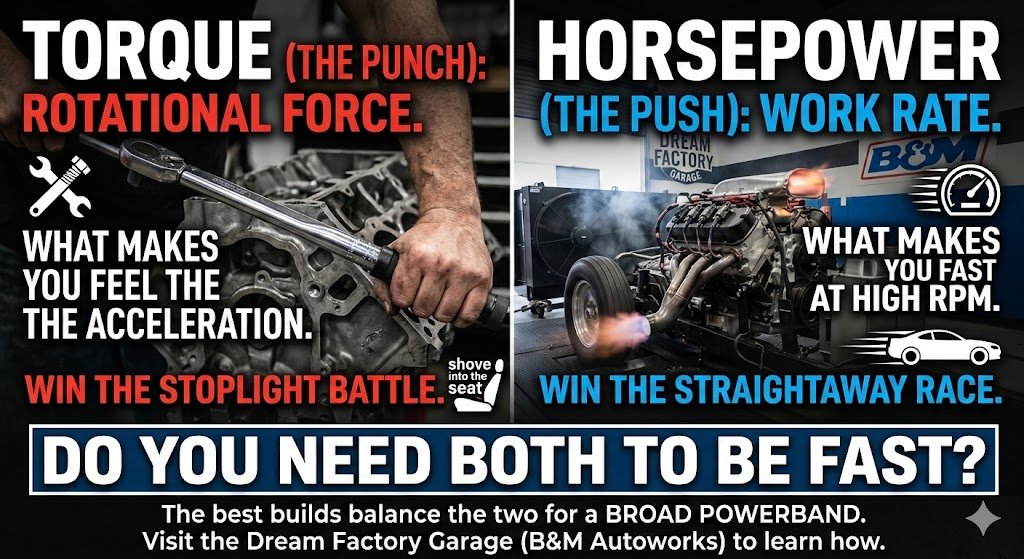
1. The Definitions: Punch vs. Power
Think of your engine as an athlete.
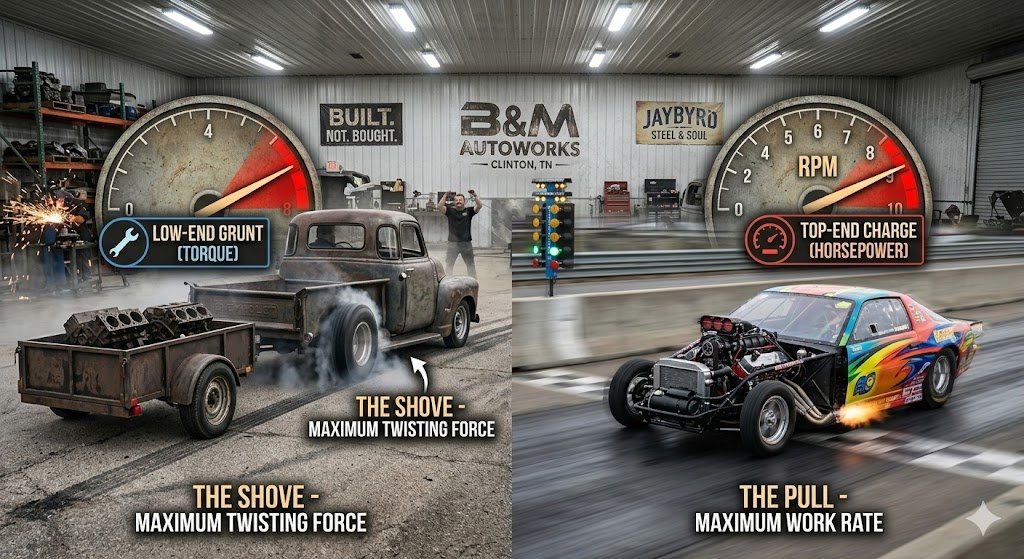
- Torque (The “Muscle”): This is rotational force. It is the raw strength that gets the car moving from a standstill. If you’re at a red light and you floor it, that “shove” back into your seat is torque.
- Horsepower (The “Work Rate”): This is a measurement of how fast that work is being done. While torque is the strength to turn the wheels, horsepower is how many times you can apply that strength per minute.
The Mathematical Link
In the automotive world, these two are inseparable. They are linked by a specific formula:
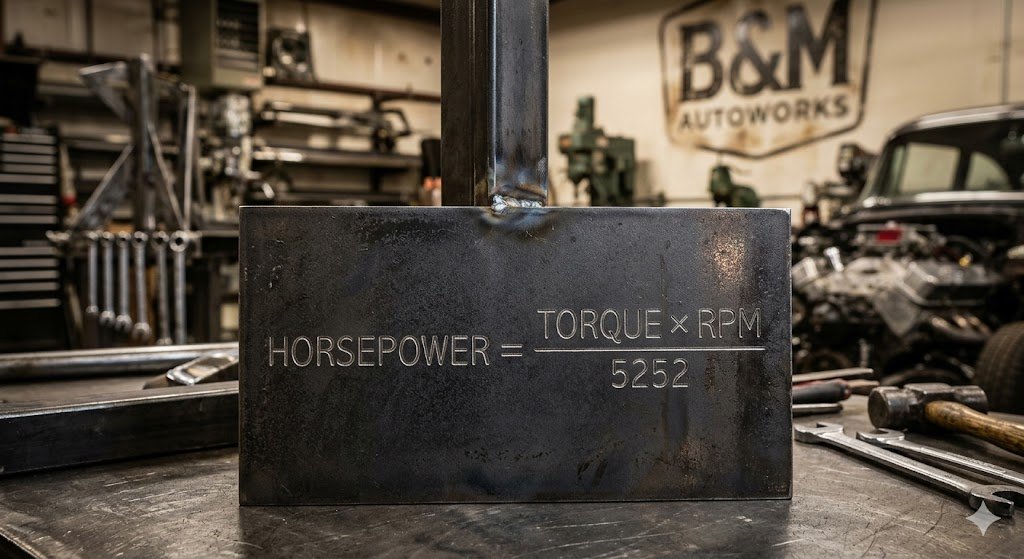
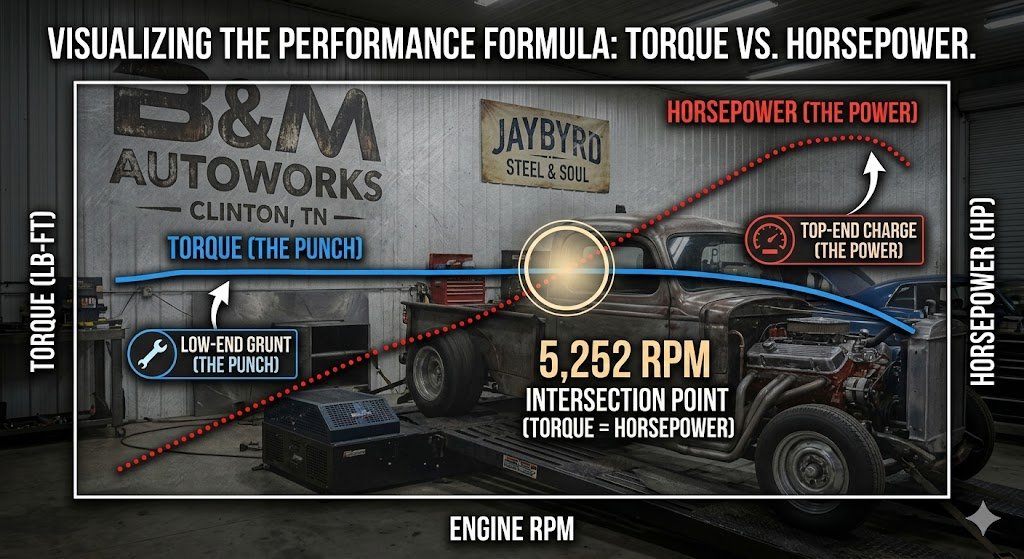
Because of this math, horsepower and torque curves will always cross at exactly 5,252 RPM on a dyno graph.
2. Which One Makes You “Fast”?
The answer depends on what kind of “fast” you want to be.
Torque is for “Quickness”
If you want to win a stoplight-to-stoplight drag or pull a heavy trailer, you want a high torque figure at low RPMs. This is why diesel trucks and big-block V8s feel so powerful the moment you touch the gas; they don’t need to “wind up” to move.
Horsepower is for “Speed”
If you want a high top speed or a car that keeps pulling hard as you fly down the backstretch of a track, you need horsepower. Small, high-revving engines (like those in Formula 1 or many Japanese tuners) might have low torque, but because they can spin at 9,000+ RPM, they generate massive horsepower.
3. The Dream Factory Verdict: The “Area Under the Curve”
New builders often get caught up in “Peak Numbers”—the highest number on the brochure. But on the road, peak numbers are rarely where you spend your time.
To be truly fast, you want a broad powerband. You want an engine that produces high torque early and maintains it as long as possible. When the torque starts to drop off at high RPMs, the rising RPMs keep the horsepower climbing.
What do you need for your build?
- For Drifting/Street: You want “Low-End Grunt” (Torque) to break the tires loose and get moving quickly.
- For Drag Racing/Track: You want “Top-End Charge” (Horsepower) to keep the car accelerating as you shift through the gears.
Pro-Tip for the Next Gen
“Torque wins hearts, but Horsepower sells cars.” Don’t build a “dyno queen” that only makes power for a split second at the very top of the rev range. Build a car with a flat torque curve, and you’ll beat the “high horsepower” guys every time.