
By JayByrd for Dream Factory Society
The legend of the small-block Chevy is built on 350s, 383 strokers, and the modern LS swap. But parked in the driveway of many starting builders is the motor they got for free: the venerable GM 305. For decades, the 305 has been the target of internet “car guy” jokes, labeled a weak, choked-out emissions engine.
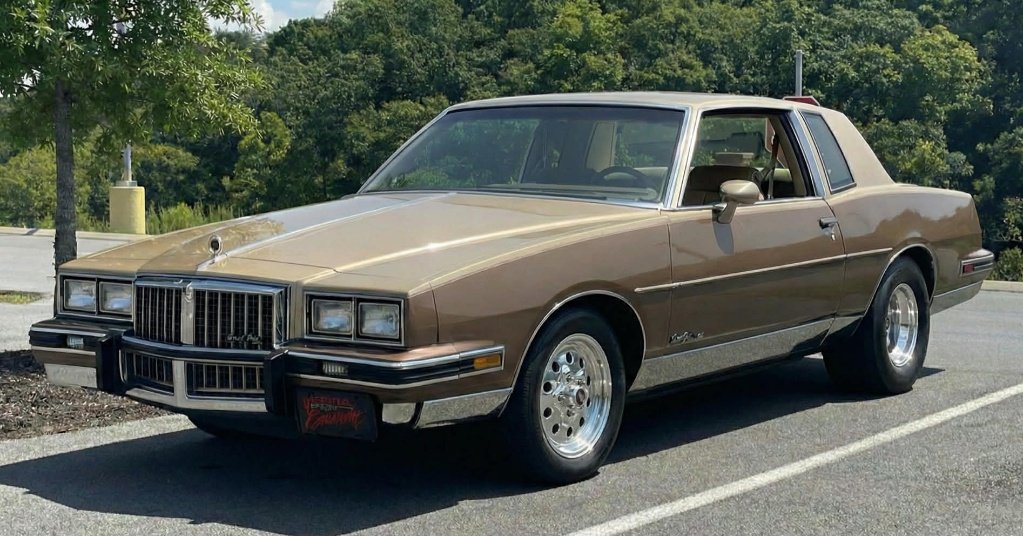
At Dream Factory Society, we don’t believe in giving up on a perfectly good V8. We believe in maximizing potential. Our newest project—a bone-stock 1986 Pontiac Grand Prix—is on a mission to prove that with the right combination, a high-winding 305 can be a legitimate, tire-shredding sleeper.
Here’s exactly how we’re turning this 1980s cruiser into a “Max Effort” G-Body street machine.

The Goal: Port Velocity & Cylinder Pressure
The primary limitation of a stock 1986 305 (usually an LG4 or L69) is the combination of tiny valves, a restrictive computer-controlled Quadrajet, and a mild flat-tappet camshaft. We aren’t trying to turn this into a 1,000 HP monster; we want a snappy, reliable street car that pulls hard to 6,000 RPM.
Our strategy is all about matched components. A big engine needs big parts, but a small engine like a 305 needs parts that maintain high air velocity to build torque.
Step 1: The Foundation (Gears & Converter)
Before we touched the engine, we addressed the G-Body’s biggest bottleneck: its lazy stock drivetrain. A stock Grand Prix came with tall, fuel-economy gears (like 2.41s) that make any engine feel slow.
We are swapping to 3.73 rear gears, which will keep the 305 right in its new power band. To make sure the car “snaps” off the line, we’re pairing those gears with a 2,200 stall torque converter (TCI Streetfighter style) and a built TH350 transmission. This single combination will do more for “seat of the pants” performance than any cam swap alone.
Step 2: Letting the Small-Block Breathe
With the drivetrain sorted, we turned to the top end. We need high compression and high velocity.
The Heads:
We are scrapping the stock computer-era heads for a set of 56cc World Products S/R Torquer castings. It is critical on a 305 to use a 56–58cc chamber. Using standard 350-style 64cc heads will kill your compression ratio (often dropping it to a miserable 8:1) and shroud the small valves. These World Products heads feature efficient 170cc intake runners that keep air moving fast.
The Inductions & Spark:
The old electronic carb is gone. In its place is an Edelbrock Performer EPS dual-plane intake and an Edelbrock AVS2 500 CFM carburetor. The AVS2 uses annular boosters, which means incredible throttle response and crisp fueling. We complete the conversion with a high-output HEI distributor (MSD or TSP) to ensure a reliable, hot spark at 6,000 RPM.
The “Rowdy” Cam:
The crowning jewel is the camshaft. We selected the COMP Cams XE262H. It’s a split-profile hydraulic flat-tappet cam (.462″/.469″ lift, 218°/224° duration). This profile gives the weak 305 exhaust ports a massive “hand” to get the exhaust out. The result is a muscle car thump that sounds incredible on camera, without sacrificing the vacuum needed for the Grand Prix’s power brakes.
Step 3: Reliability & Dress-Up
You can’t have performance without reliability. We’re upgrading to a double roller timing chain (mandatory!), a durable [flexplate](link to a flexplate), and an external transmission cooler to handle the heat from the 2,200 stall.
And because it’s a Dream Factory Society build, it has to look the part. We’re finishing the engine with a retro-styled set of Finned Aluminum tall valve covers and a matching 14-inch round air cleaner. No chrome; just a clean, brushed-aluminum look that screams “built, not bought.”
The Ultimate Sleeper
By the time we’re done, this 1986 Grand Prix will be transformed. It will still have that classic G-Body look, but with 3.73 gears, high compression heads, and a thumping COMP Cam, it will have the performance to back up the noise.
We’re proving that the 305 isn’t a dead end. It’s just waiting for a builder with the right knowledge to unlock its potential. Stay tuned for the dyno results and the tire-smoke video.
This is what Next Gen building is all about.
This complete parts list is optimized for your 1986 Pontiac Grand Prix’s 305 V8. It prioritizes air velocity and torque to make the most of your 3.73 gears and 2,200 stall converter while giving you that high-end Dream Factory Society look.
1. The Power Plant: Heads, Cam & Valvetrain
The 305 needs small combustion chambers to maintain compression. These parts are selected to work together for a broad powerband from idle to 6,000 RPM.
- Heads: SBC 305 World Products S/R Cylinder Heads – These 58cc heads are the standard for high-performance 305s, providing the perfect compression ratio without shrouding the valves.
- Camshaft Kit: Comp Cams Xtreme Energy Camshaft/Lifter Kit – The XE262H profile provides a noticeable “muscle car” lope while maintaining enough vacuum for your power brakes.
- Head Bolts: ARP 134-3601 SBC Cylinder Head Bolts – Essential for a reliable seal; these include the necessary thread sealer for the SBC water jackets.
2. The Induction: Intake & Carburetion
Matched for the 305’s smaller displacement to ensure crisp throttle response and no “flat spots.”
- Intake Manifold: Edelbrock 2701 Performer EPS Intake Manifold – Optimized for dual-plane performance and “tuned” for peak torque at 3,500 RPM.
- Carburetor: Edelbrock AVS2 500 CFM Carburetor – Features annular boosters for superior fuel atomization compared to standard 600+ CFM models.
- Intake Gaskets: Fel-Pro 1204 Intake Manifold Gasket Set – The industry standard for performance SBC builds to prevent vacuum and coolant leaks.
3. The Drivetrain: Gears & Traction
Transforming the lazy G-Body highway cruiser into a street machine requires moving from “peg-leg” open differentials to a true limited-slip setup.
- Posi Unit: Eaton Posi GM 7.5 10-Bolt 26-Spline – A rebuildable, clutch-style limited-slip differential that ensures power goes to both wheels.
- Gears: Richmond Gear GM 7.5″ 10-Bolt 3.73 Gear Set – The perfect ratio for a 305 to stay in its powerband without making highway driving unbearable.
- Stall Converter: A 2,200 stall converter is highly recommended to bridge the gap between your idle and the 305’s peak torque.
4. Aesthetics & Finishing
- Valve Covers: Small Block Chevy Finned Black Tall Aluminum Valve Covers – Tall profile for rocker clearance with a classic finned design for the “Inspirational Garage” look.
- Distributor: An HEI Performance Distributor with an adjustable advance curve to dial in your timing for the new cam and gears.
Complete Build Component Summary
| Category | Part Name | Primary Benefit |
| Airflow | World Products S/R Heads | High compression & port velocity. |
| Power | Comp Cams XE262H | Aggressive sound & mid-range pull. |
| Fueling | Edelbrock AVS2 (500 CFM) | Near-EFI throttle response. |
| Traction | Eaton Posi & 3.73 Gears | Eliminates one-tire fire; better acceleration. |
To ensure this 305 lasts, would you like me to find a high-zinc break-in oil and a magnetic oil drain plug to capture any metal during the initial engine run-in?
🛠️ Master Torque Checklist: 305 V8 Build
Project: 1986 Pontiac Grand Prix (Street/Strip Max-Effort 305)
I. Cylinder Heads & Valvetrain
- [ ] Cylinder Head Bolts:70 ft-lbs
- Procedure: 3 Steps (40 ➔ 55 ➔ 70).
- Note: Use PTFE sealant on threads (lower bolts go into water jacket).
- [ ] Rocker Arm Nut (Adjustment):Zero Lash + 1/2 Turn
- Note: Standard for hydraulic flat-tappet cams.
- [ ] Spark Plugs: 20 ft-lbs
II. Intake & Fuel System
- [ ] Intake Manifold Bolts:30 ft-lbs
- Procedure: 2 Steps (15 ➔ 30). Follow center-out criss-cross pattern.
- [ ] Carburetor Mounting Nuts:80 in-lbs (approx. 7 ft-lbs)
- Note: Do not over-tighten; it will warp the baseplate and cause vacuum leaks.
- [ ] Thermostat Housing: 20 ft-lbs
III. Front & Bottom End
- [ ] Harmonic Balancer Bolt: 60 ft-lbs
- [ ] Camshaft Sprocket Bolts (3):20 ft-lbs
- Note: Use Blue Loctite.
- [ ] Timing Cover Bolts: 80 in-lbs
- [ ] Oil Pan Bolts (Corners): 12 ft-lbs
- [ ] Oil Pan Bolts (Rails): 80 in-lbs
- [ ] Water Pump Bolts: 30 ft-lbs
IV. Drivetrain (TH350 & Rear End)
- [ ] Flexplate to Crankshaft:60 ft-lbs
- Note: Use Red Loctite.
- [ ] Torque Converter to Flexplate: 30 ft-lbs
- [ ] Rear Diff Cover Bolts: 20 ft-lbs
- [ ] Ring Gear Bolts (7.5″ Posi):65 ft-lbs
- Note: Often Left-Hand Threads. Use Red Loctite.
- [ ] Bearing Cap Bolts (Rear End): 60 ft-lbs
⚠️ Critical Conversion Table
| If the spec says… | Multiply by 12 | To get Inch-Pounds |
| 7 ft-lbs | x 12 | 84 in-lbs |
| 10 ft-lbs | x 12 | 120 in-lbs |
Dream Factory Tech Tip: “Hand tight” is the enemy of a performance build. Always use a calibrated 1/2″ torque wrench for the big stuff (Heads/Flexplate) and a 1/4″ or 3/8″ torque wrench for the small stuff (Valve covers/Intake) to avoid snapping bolts in your new aluminum parts.