It’s the ultimate gearhead crossroads. You’ve got a rolling chassis—maybe a classic G-Body, a square body truck, or an S10—and the vision of a modern, fuel-injected LS V8 under the hood. Now comes the hard part: Do you bust out the cherry picker, clear the weekend schedule for the next six months, and do it yourself? Or do you hand the keys and a blank check to a professional performance shop?
At Dream Factory Customs, we respect the hustle of the home builder, but we also know the value of professional fabrication. Here is the honest breakdown of what it really takes to LS swap your ride, and whether you should DIY or pay the pros.
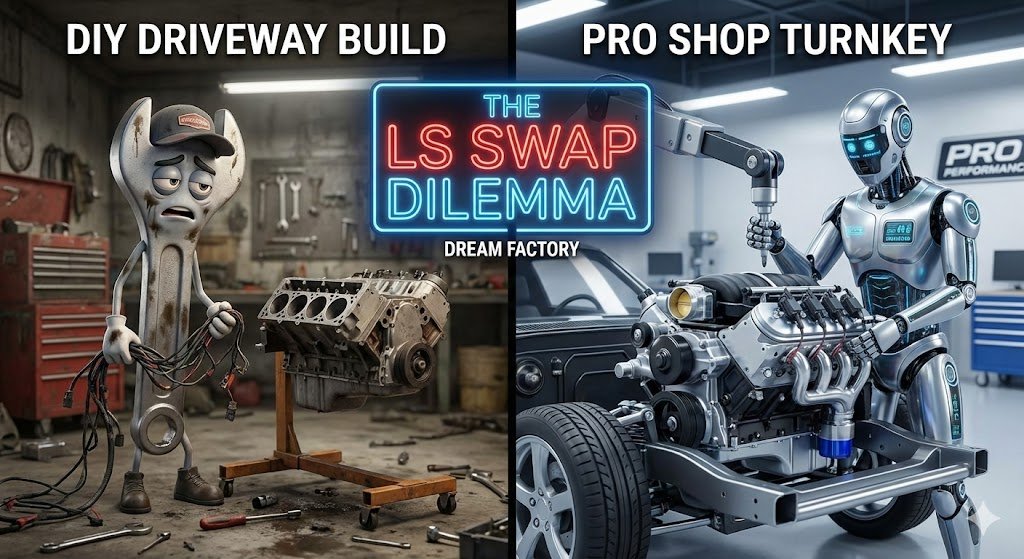
The DIY Route: Built, Not Bought
There is no better feeling than firing up an engine you wired, plumbed, and bolted in yourself. But the driveway swap isn’t for the faint of heart.
The Pros:
- Massive Cost Savings: Labor is expensive. By turning your own wrenches, you can save anywhere from $4,000 to $10,000+ in shop fees. That’s money you can put toward a Holley Terminator X, better heads, or a beefier transmission.
- Intimate Knowledge of Your Ride: When you build it, you know exactly how to fix it. If a fuel pump relay goes bad on a road trip, you know exactly where it is and how it’s wired.
- The Pride Factor: “I built this.” Those three words are worth their weight in gold at any cruise-in.
- Work at Your Own Pace: You can buy parts piecemeal as your budget allows, spreading the cost out over a year or two.
The Cons:
- The Time Sink: What a shop can do in three weeks might take you three years of nights and weekends. Life gets in the way.
- Hidden Costs & The “Tool Tax”: You might save on labor, but you will spend money buying engine hoists, specialized fuel line crimpers, AN fitting wrenches, and welding gear.
- The Wiring Wall: If you aren’t comfortable reading schematics, figuring out the electrical integration (gauges, neutral safety switches, fans) can bring a DIY project to a grinding halt.
The Professional Shop Route: Turnkey Muscle
Dropping your car off at a reputable speed shop means trading money for time, peace of mind, and professional execution.
The Pros:
- Speed and Efficiency: A dedicated crew does this every day. They know exactly which oil pan clears your crossmember and which headers fit your steering shaft. They can often turn a car around in a matter of weeks.
- Professional Fabrication: Shops have TIG welders, CNC plasma tables, and pipe benders. If a custom transmission crossmember or exhaust system needs to be fabricated, it gets done right and looks beautiful.
- Tuning Included: A good shop won’t just bolt the engine in; they will put it on the dyno, dial in the fuel maps, and ensure it idles perfectly and makes safe power.
- Warranty and Support: If a fitting leaks or a sensor fails a week later, you take it back. It’s on them to make it right.
The Cons:
- The Invoice: This is the big one. A high-quality, professional, turnkey LS swap (engine, trans, fuel system, cooling, wiring, tuning) will easily cost $15,000 to $25,000+ total, depending on the parts used.
- Finding the Right Shop: Not all mechanics are fabricators. Handing a custom swap to a standard collision or repair shop is a recipe for disaster. You need a dedicated performance/swap shop.
- Less Personal Connection: You miss out on the late-night garage stories and the intimate mechanical bond with the vehicle.
The Cost & Time Comparison
| Factor | The DIY Garage Builder | The Pro Shop Customer |
| Labor Cost | $0 (Just your sweat & tears) | $4,000 – $12,000+ |
| Total Build Cost | $5,000 – $10,000 (Average) | $15,000 – $30,000+ |
| Time to Complete | 6 Months to 3+ Years | 3 to 6 Weeks |
| Tuning / Dyno | Mail-order tune or self-learning EFI | Professional Dyno Session |
The Dream Factory Verdict: The Hybrid Approach
Here in East Tennessee, we see a lot of guys take the Hybrid Approach. This is often the best of both worlds.
Do the heavy lifting yourself to save cash: pull the old engine, clean the engine bay, mount the new LS and transmission, and run the basic plumbing. Then, tow the rolling project to a professional shop to handle the intimidating stuff—like building a custom wiring harness, fabricating a stainless exhaust system, and dialing in the final dyno tune.
It keeps your budget intact while ensuring the complex systems are handled by pros so the car is actually reliable.