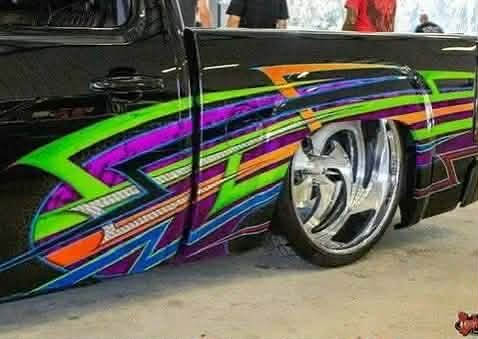
Wheels make or break the car. A killer stance makes a rusty project look mean, but the wrong offset makes a $50,000 show car look like a roller skate.
For the new generation, looking at wheel catalogs is confusing. You see numbers like “+12mm Offset” or “4.5-inch Backspacing.”
Here is the no-nonsense guide to measuring your wheel well so your tires don’t rub the paint off your fenders.
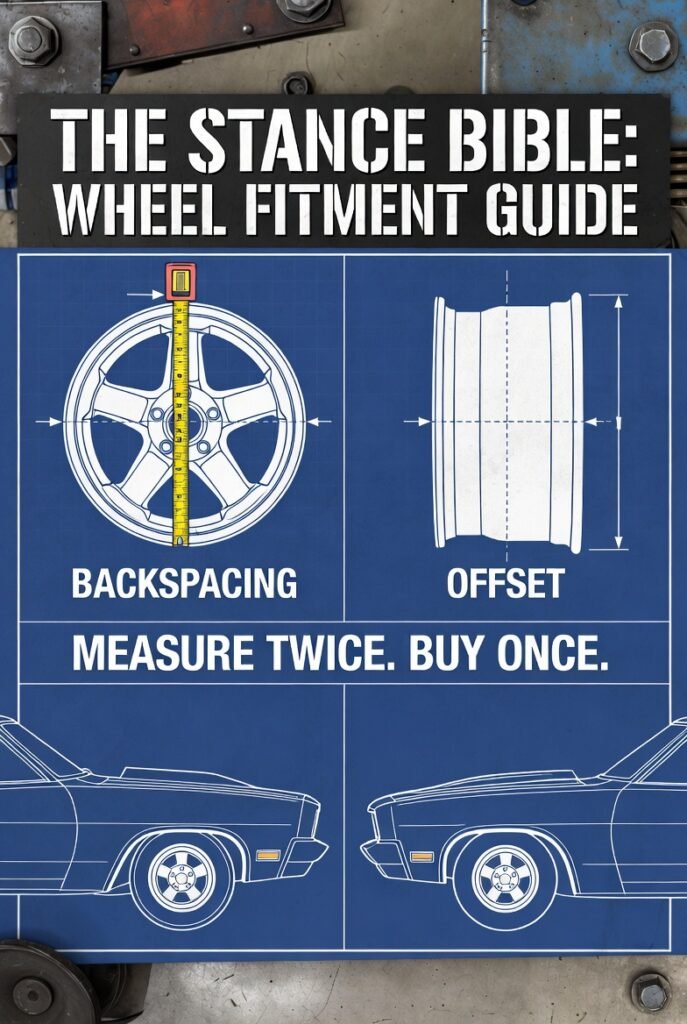
1. The Old School: Backspacing
This is the number most muscle car guys use. It is simple, physical, and easy to measure with a ruler.
- What it is: The distance from the back edge of the rim to the mounting surface (where the wheel touches the hub).
- How to Measure:
- Lay the wheel face down on the ground (put a towel down first!).
- Lay a straight edge (like a yardstick) across the back of the rim.
- Measure from the straight edge down to the mounting pad.
- That number is your Backspacing.
The Rule of Thumb:
- More Backspacing (e.g., 5 inches): The wheel sits further in (tucked).
- Danger: It hits your suspension, control arms, or frame rails.
- Less Backspacing (e.g., 3 inches): The wheel sits further out (poke).
- Danger: It hits your fender lip and cuts your tire when you hit a bump.
2. The New School: Offset
This is usually measured in millimeters (mm) and refers to the centerline of the wheel.
- Zero Offset: The mounting pad is dead center in the middle of the wheel.
- Positive Offset (+): The mounting pad is pushed toward the face of the wheel. (Common on modern cars like Corvettes and Civics. The wheel looks “flat”).
- Negative Offset (-): The mounting pad is pushed toward the back of the wheel. (Common on lifted trucks and deep-dish muscle cars. This gives you that “deep lip” look).
Pro Tip: Don’t try to convert offset to backspacing in your head. It’s a math headache. Stick to Backspacing for classic American muscle.
3. The “Sweet Spot” for Muscle Cars
If you are building a G-Body (Monte Carlo, Cutlass, Regal) or a classic Chevy, here is the cheat sheet for a standard 15×8 or 17×8 wheel:
- 3.75″ – 4.0″ Backspacing: This pushes the wheel out slightly. It fills the wheel well nicely but might require you to “roll” the fender lip if the car is lowered.
- 4.5″ Backspacing: This tucks the wheel in more. It’s safer for stock suspension, but if you go too wide on the tire, you might rub the frame frame when you turn the steering wheel all the way.
4. How to Measure Your Car (The “Cardboard Trick”)
Don’t guess. Measure your actual car before you buy wheels.
- Jack up the car and take the wheel off.
- Cut a piece of cardboard to the width of the wheel you want (e.g., 8 inches or 10 inches).
- Hold it against the hub.
- Measure Inward: From the hub to the nearest obstruction (frame, exhaust, shock). Subtract 1 inch for safety. This is your Max Backspacing.
- Measure Outward: From the hub to the inner fender lip. Subtract 1 inch for tire bulge. This is your Frontspace.
The Dream Factory Verdict
“Measure Twice, Buy Once.”
If you buy wheels that don’t fit, most shops won’t take them back once you mount a tire on them.
- For the Deep Dish Look: You want Less Backspacing (Negative Offset).
- For the Tucked / Pro-Touring Look: You want More Backspacing (Positive Offset).
When in doubt, find a guy on a forum with your exact car and ask him what he is running. Then subtract a quarter-inch just to be safe.
Steel & Soul – Dream Factory Garage